
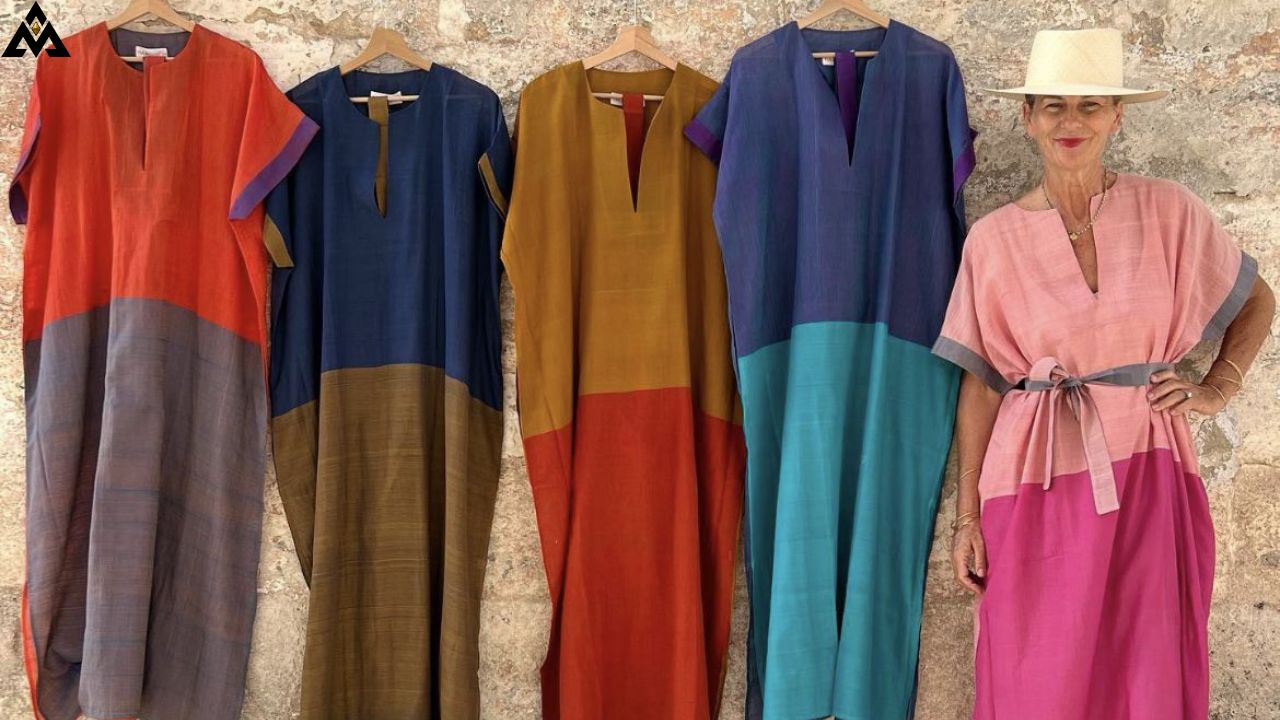
Caftan styling gets easier when you stop treating it like “just a loose outfit” and start styling it with purpose. This guide on how to wear a caftan is practical, occasion-based, and complete, so you can build polished looks with better silhouette, drape, comfort, and elegance. You’ll learn what works for women and men, where each look fits best, which fabrics make the biggest difference, how accessories change the result, and which mistakes ruin styling balance.
What Is a Caftan Dress?
A flowing, robe-like silhouette appears in many fashion traditions, which is why definitions can vary by region, cut, and finish. In everyday style language, “kaftan” and this spelling are often used interchangeably, but the design range is wide: some pieces are simple and minimal, while others are embroidered, ceremonial, and highly detailed.
Its timeless appeal comes from flexibility. The same shape can support modest fashion, resort wear, formal dressing, and relaxed day looks, depending on fabric, length, and styling choices. That versatility is exactly why it has remained relevant across changing trends.
How to Wear a Caftan for Women: Everyday, Elegant, and Modest Styling Ideas
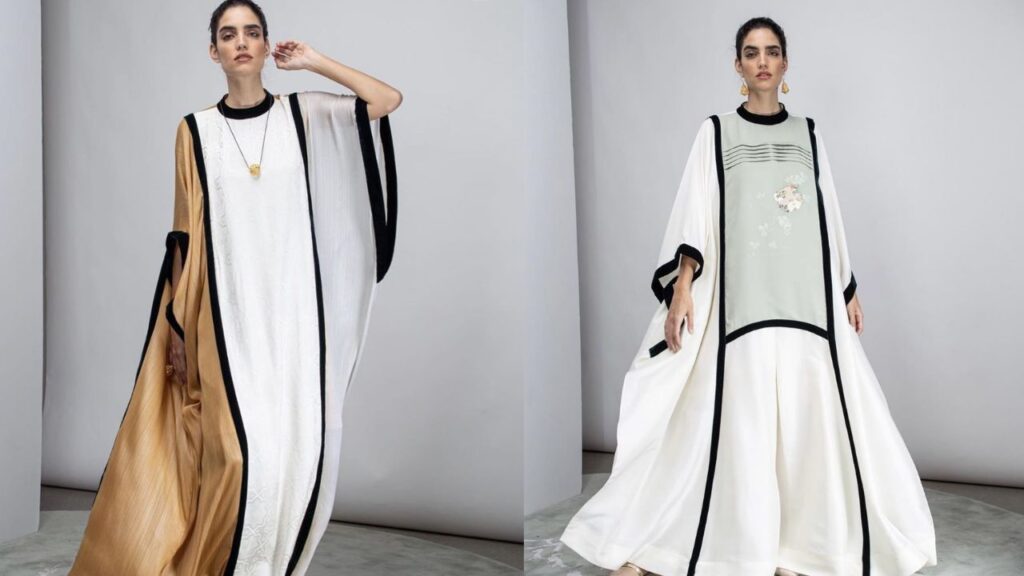
For women, the smartest approach starts with three decisions: occasion, proportion, and fabric. A flowing cut can feel flattering because it offers movement and comfort, but the final result depends on how you manage waist definition, neckline balance, and layering.
1. Casual / Day looks
Choose breathable materials like cotton, linen, or soft blends to keep the outfit comfortable for long daytime wear. Pair it with easy flats or simple sandals, and carry a small tote for brunch, shopping, errands, or a family visit. Keep jewelry minimal so the look stays fresh and effortless, not overdone. Let either the outfit print or one accessory be the focal point, so the styling feels balanced and relaxed.
2. Formal / Event looks
For formal settings, add structure with a belt to define the waist and create a cleaner silhouette. Choose heels that match the dress code, then finish the look with a clutch and statement earrings for a refined, occasion-ready result. This combination helps the outfit look polished and intentional, especially for dinners, parties, or wedding events. It also makes day-to-night styling easier because the shape and accessories instantly elevate the overall appearance.
3. Modest / Elegant looks
Use a scarf or shawl for soft layering when you want a more modest yet polished finish, especially for family dinners, festive gatherings, or faith-centered events. The key is to add coverage without losing the outfit’s graceful drape. Choose lightweight layers that move naturally and do not create unnecessary bulk around the shoulders or waist. This keeps the look elegant, comfortable, and visually balanced while still feeling appropriate for the occasion.
4. Short body-type preview
Different body types can wear this style beautifully, but small adjustments make a big difference in the final result. Petite frames often look best with cleaner lines, controlled volume, and proportions that do not overwhelm the body. Curvier shapes usually benefit from gentle waist emphasis and a stronger vertical line to create balance and flow. The goal is not to hide the body, but to use fit and styling choices that improve comfort, confidence, and silhouette balance.
How to Wear a Caftan for Men: Modern, Traditional, and Occasion-Ready Looks
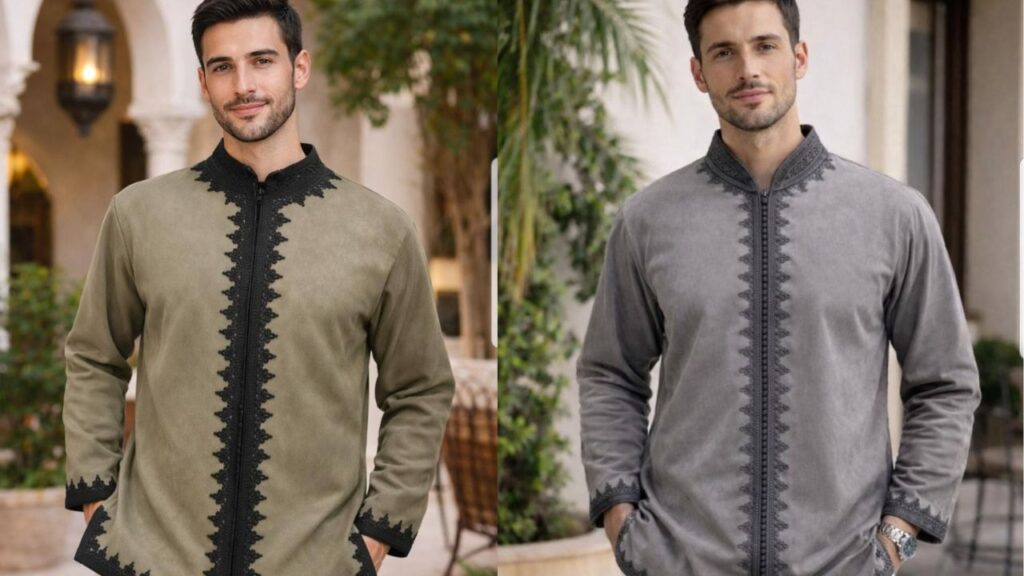
For men, the best results come from a simple framework: fit, fabric, and footwear. When those three elements match the setting, the look feels intentional and respectful, whether the goal is modern minimalism or traditional presentation.
1. Modern / Minimal Looks
For a modern caftan for men, choose clean lines, solid colors, and a neat fit that feels structured without being tight. Focus on simplicity by avoiding too many accessories and letting the silhouette do the work. Pair it with loafers or refined sandals for a polished finish that works well for dinners, casual gatherings, or smart day events. This approach keeps the outfit contemporary, balanced, and easy to repeat.
2. Traditional / Cultural Styling
Traditional styling works best when the focus stays on craftsmanship, fabric texture, and respectful presentation. If the garment includes embroidery or cultural detailing, keep the rest of the look understated so the design remains the focal point. Choose footwear that matches the occasion and cultural setting rather than mixing in overly casual pieces. This creates a look that feels authentic, elegant, and appropriate for cultural attire or formal family functions.
3. Festive / Occasion-Ready Looks
For festive wear, use richer fabrics, deeper tones, or refined detailing to make the outfit feel celebration-ready. A well-chosen men’s caftan style can work beautifully for Eid gatherings, weddings, evening events, or traditional ceremonies when the fabric weight and finish match the setting. Keep the footwear polished and the overall styling clean so the look does not feel overloaded. The goal is to look elevated and confident, not overly decorated.
4. Fit, Fabric & Footwear Formula (Quick Men’s Styling Rule)
The easiest way to style a caftan for men is to follow a simple formula: fit first, fabric second, footwear third. Start with a cut and length that suits your frame, then choose a fabric based on the weather and occasion. After that, match shoes to the dress code—loafers for formal or semi-formal looks, and sandals for relaxed or cultural settings. This framework makes styling faster, more consistent, and visually balanced every time.
Read More About Abaya: Discover the Best Abaya Company in Dubai for Timeless Elegance & Quality
Top 5 Abaya Brands in Saudi Arabia
How to Wear a Caftan by Occasion: Casual, Wedding, Beach, and Festive Events
Occasion-specific styling matters because dress code changes everything: fabric choice, accessory level, shoe type, and how polished the outfit should feel. The easiest way to avoid confusion is to use a short formula for each setting.
Casual (Brunch, Family Event, Day Out)
- Choose breathable fabrics that feel light and comfortable for daytime wear.
- Pair the look with flats or simple sandals for easy movement.
- Keep accessories light and minimal so the outfit stays relaxed.
- Do this: Keep one focal point only (either the print or the jewelry).
- Avoid this: Heavy glam pieces that feel too formal for daytime settings.
Wedding Guest / Evening Party
- Choose a more polished piece with controlled drape for a refined look.
- Select dressier shoes that match the venue and event tone.
- Match the embellishment level to the invitation and dress code.
- Do this: Pair with heels and a structured bag or clutch.
- Avoid this: Beach footwear or overly casual totes that reduce elegance.
Beach Vacation / Resort Stay
- Go for light, airy, and practical styling that feels effortless.
- Prioritize breathability and movement over formal structure.
- Use soft fabrics that stay comfortable in warm weather.
- Do this: Wear open sandals and keep layers minimal.
- Avoid this: Thick, heat-trapping materials that feel heavy and uncomfortable.
Festive / Eid Gathering
- Choose richer textures to create a celebration-ready look.
- Keep color coordination balanced to make the outfit feel polished.
- Add one clear statement element to elevate the overall styling.
- Do this: Combine one standout accessory with one supporting piece.
- Avoid this: Competing prints and bold jewelry together in the same look.
How to Wear a Caftan with Accessories, Shoes, and Layers
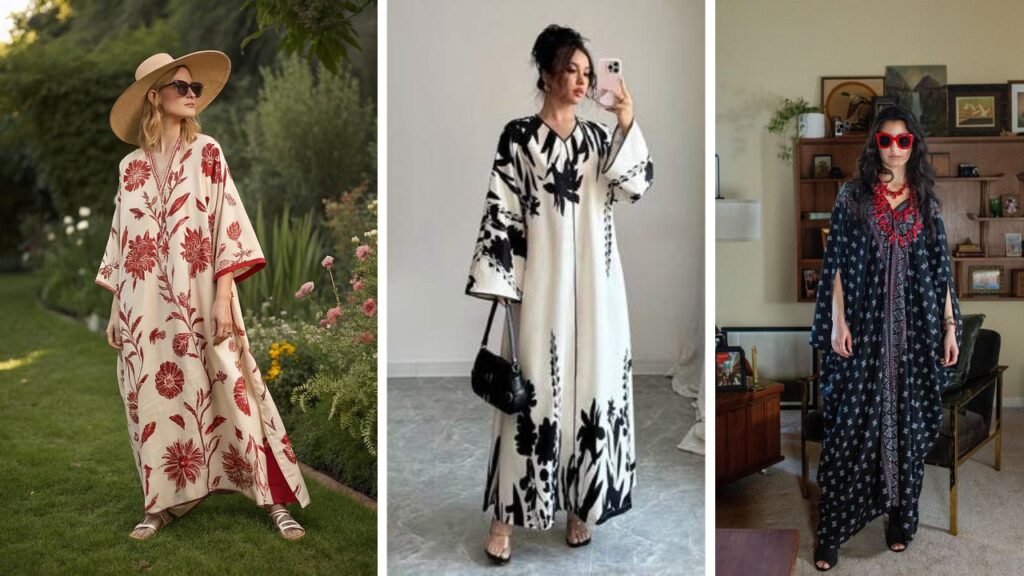
Accessories can elevate the entire look or create visual clutter. The rule is simple: build around balance, contrast, and texture rather than adding everything at once.
Use this decision tree:
- Printed piece → minimal jewelry + simple sandals/flats
- Plain piece → one statement accessory (earrings or bracelet)
- Formal event → structured clutch bag + heels
- Day outing → tote bag + flats
- Cool weather / modest styling → shawl or scarf as a layering piece
Belting can help create shape, but not every outfit needs it. If the fabric already drapes beautifully, leave the line relaxed. If the look feels too wide, add a belt and test the placement at the natural waist or slightly above it.
How to Wear a Caftan for Different Body Types and Fits
The same silhouette can look very different from one person to another because proportions, volumes, and line distributions change from frame to frame. “Flattering” should mean comfort, confidence, and visual balance—not hiding the body.
- Petite: Choose cleaner prints, less excess volume, and lengths that do not overwhelm the frame. A defined waist or a vertical seam effect often helps.
- Curvy/Plus-size: Soft drape plus selective structure works well. Try belted and loose options based on the event, then choose the version that gives movement without losing shape.
- Tall: Longer lengths, stronger prints, and fuller drape can work beautifully. Focus on hemline balance and footwear so the full look feels grounded.
Best Fabrics for a Caftan Dress: Comfort, Drape, and Season-Wise Styling
Fabric changes how the outfit moves, breathes, reflects light, and holds structure. That is why the same silhouette can look casual in one textile and formal in another.
1. Best for Hot Weather
Cotton, linen, and chiffon are excellent choices for hot weather because these fabrics feel lightweight and breathable. They allow better airflow, keeping the outfit comfortable and preventing overheating. These materials also support easy movement, especially for day outings, travel, or casual events. Both comfort and effortless drape are maintained, which is essential for warm-climate styling.
2. Best for Formal Elegance
Silk, satin, and crepe are strong options for formal looks because they naturally create a polished finish. The sheen of these fabrics gives the outfit a more refined and event-ready appearance, especially for evening functions. Their smoother drape also creates a cleaner silhouette and makes the styling feel more intentional. If you want an elegant result, these fabrics offer a strong balance of structure and grace.
3. Best for Travel
Crepe or wrinkle-tolerant blends are very practical for travel-friendly styling, especially when you are managing packing space. These fabrics usually hold their shape better after folding and require less pressing. After unpacking, they often require less adjustment, making travel routines easier and faster. That is why they are a smart choice for both comfort and convenience.
4. Best for Cooler Weather
Layered georgette, denser blends, or evening styles with velvet accents can create a refined look in cooler weather without adding unnecessary bulk. These options give the outfit a slightly more structured feel, which helps in cold-season styling. If layered thoughtfully, the look can feel warmer while still keeping a graceful drape. This allows you to maintain style without compromising seasonal comfort.
5. Season Rule (Quick Styling Principle)
In hot weather, your first priority should be breathability so the outfit stays comfortable and wearable. In cooler weather, the focus should shift to structure and thoughtful layering for a more polished look. Simply choosing a thick fabric is not enough, because layering balance also matters. The right season-based fabric choice makes the same outfit feel more elegant and practical.
Read More: What Is a Kaftan?
Common Mistakes to Avoid When Wearing a Caftan (and How to Fix Them)
Most styling problems come from a mismatch, not from the garment itself. Common issues include using the wrong shoes, too many accessories, poor fit adjustment, or ignoring fabric transparency.
1. Mistake: Wrong Shoes
- Shoes that do not match the event dress code make the whole outfit look mismatched.
- The wrong shoe shape or height can throw off the hemline and overall silhouette.
- This usually happens when shoes are chosen last instead of being planned with the outfit.
- Pick shoes based on the occasion first, then match the color and finish to the look.
- Always do a quick walk test to check comfort, movement, and balance with the outfit.
2. Mistake: Over-Accessorizing
- Too many bold accessories at once create visual clutter and reduce elegance.
- A printed or embellished outfit already adds detail, so extra pieces can compete too much.
- This mistake happens when every accessory is treated like a statement piece.
- Keep one statement item and let the rest of the accessories stay simple and supportive.
- The more detailed the outfit is, the more minimal your accessories should be.
3. Mistake: Unbalanced Fit
- A loose or poorly adjusted fit can make the outfit look shapeless or awkward.
- The same style will not look the same on every body type, fabric, or occasion.
- This happens when people focus on color or print but ignore proportion and drape.
- Test belt placement, check the length, and move around before finalizing the look.
- A good fit should feel comfortable, balanced, and flattering at the same time.
4. Mistake: Transparency in Bright Light
- Lightweight fabrics may look fine indoors, but become see-through in natural light.
- Unexpected transparency can reduce confidence and make the outfit feel less polished.
- This usually happens because the outfit is checked only under indoor lighting.
- Add a lining or slip and recheck the outfit in daylight before wearing it out.
- Do a quick sit, walk, and light test to make sure the fabric stays secure and elegant.
Quick Styling Formula: How to Wear a Caftan Effortlessly Every Time
Use this repeatable formula when you need a polished look fast:
- Choose the occasion
- Pick the fabric
- Decide on a relaxed or belted fit
- Match the shoes to the dress code
- Add 1–2 accessories only
- Do a final mirror check (balance, comfort, movement)
This method works because it removes guesswork and keeps your outfit aligned with comfort, occasion, and finish.
Conclusion
Learning how to wear a caftan is less about following strict fashion rules and more about making smart styling choices based on occasion, fabric, fit, and accessories. When you balance comfort with structure, and elegance with practicality, the look feels polished without trying too hard. A well-styled caftan can work beautifully for casual days, formal events, travel, festive gatherings, and modern modest dressing.
FAQs
Can a Caftan Dress Be Worn to a Wedding?
Yes—if the fabric, embellishment level, and accessories match the dress code. Pair it with heels and a clutch, and avoid casual footwear or beach-first styling.
How Do I Style a Caftan for Women in a Modern Way?
Use clean lines, controlled accessories, and body-shape-aware proportions. A modern result usually comes from a single statement element, with minimal styling elsewhere.
Are There Stylish Caftan Options for Men?
Yes. Start with fit, fabric weight, and footwear, then adapt the look to casual, cultural, festive, or formal settings.
What Is the Difference Between a Regular Caftan and Caftan Marocain?
A general fashion version is often simplified for everyday wear, while the Moroccan form is often associated with greater craftsmanship, ceremonial detail, and cultural presentation.
Why Do People Search for Caftan UNESCO?
Most people are trying to understand the heritage or cultural recognition context of Moroccan textile traditions, not just styling advice.