
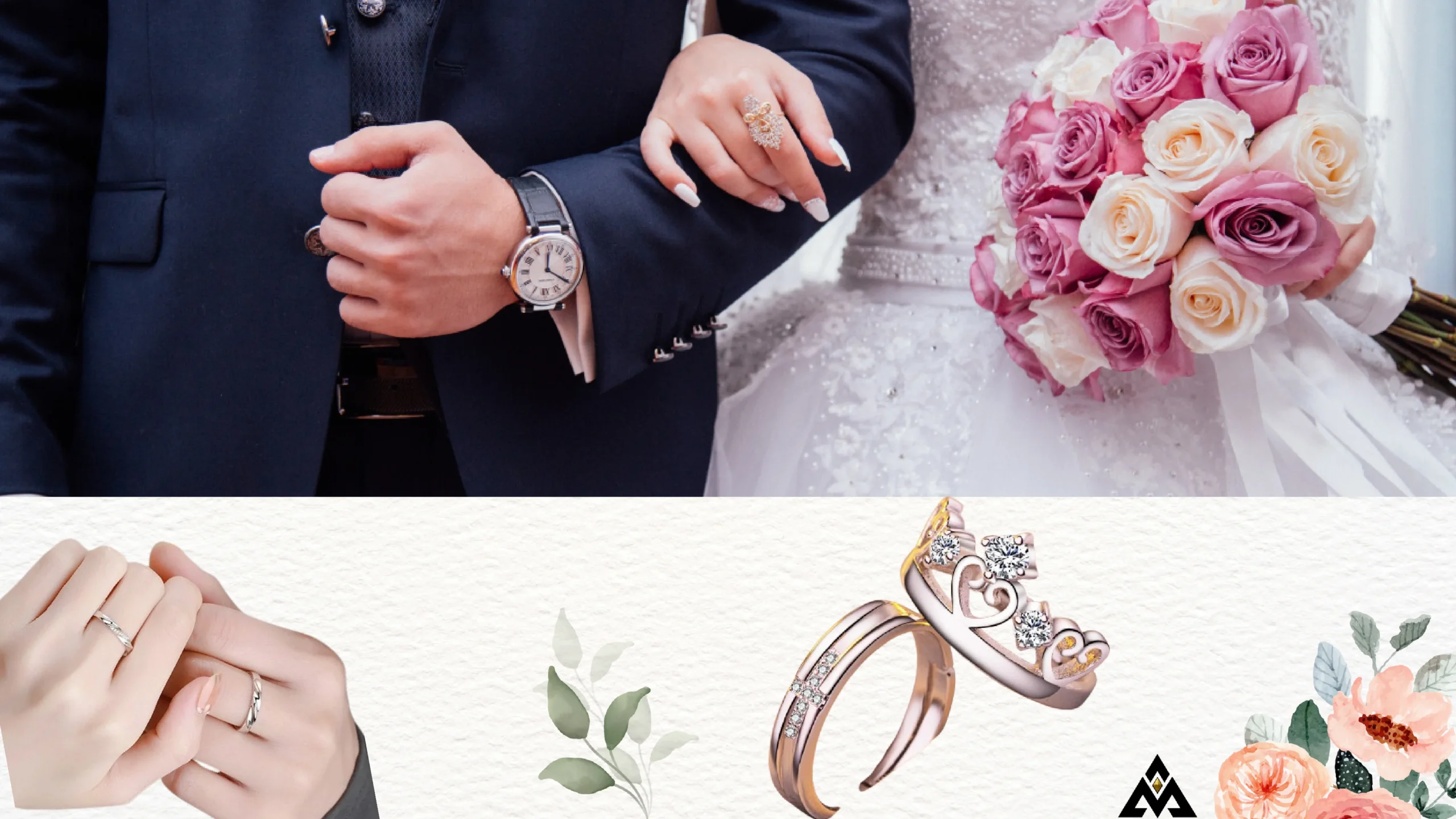
Marriage is important in Muslim cultures not just as a legal contract but as a moral, social, and spiritual obligation. In recent years, particularly in urban and globalised areas like the United Arab Emirates and Dubai, Muslim couples have increasingly started to exchange wedding bands. Many Muslims now find themselves asking a question. In Islam, is it permissible to wear wedding bands, and do Muslims wear wedding bands?
From an Islamic perspective on marriage, it is important to distinguish between religious rulings and cultural practices. Wedding rings carry a symbolic meaning of commitment and unity in many societies, but symbolism alone does not automatically make something a religious requirement. This article explores wedding rings in Islam through historical context, Islamic sources, scholarly opinions, and contemporary Muslim marital customs, especially within the UAE.
Origin of Wedding Rings: A Historical Overview
An analysis of the history of wedding rings sheds some light on the question of whether they are religious or cultural symbols of marriage.
Wedding Rings Before Islam
Before the beginning of Islam, rings were already a part of a wedding ceremony. Since the time of the ancient Romans, a wedding ring has symbolised ownership and a contract between a couple. Christian customs later incorporated wedding rings as a sign of a couple being married, and the ring signified a never-ending commitment as a sign of eternity. All of these beliefs have contributed to the modern design of wedding rings and the custom of couples exchanging rings when they get married.
Importantly, these traditions were faith-based within their own religious frameworks, not Islamic in origin.
Did Wedding Rings Exist at the Time of Prophet ﷺ?
During the time of the Prophet Muhammad ﷺ, Arab marriage customs did not include wedding rings as a marital ritual. Marriage was recognised through nikah, witnesses, and public announcement rather than physical symbols. There is no evidence that wedding rings formed part of early Islamic marriage practices. This religious absence of ritual is significant, as it shows that wedding rings were not established as a Sunnah or religious obligation in Islam.
Marriage in Islam – What Truly Matters
To understand wedding rings in Islam, one must first understand the Islamic concept of marriage itself.
Islamic Definition of Marriage (Nikah)
In the Muslim faith, nikkah is both a legal contract and a spiritual commitment, outlining the rights and duties each spouse has to one another. While some cultures focus on material aspects of a wedding, in Islam, the focus is on the intention (niyyah) behind the marriage, the consent,t and the sexuality, along with the moral obligations to God. Agreements before God are what solidify a marriage, as opposed to material objects that some cultures focus on.
Islamic Sources on Marriage
The Qur’an describes marriage as a source of tranquillity, affection, and mercy between spouses. Similarly, the Hadith emphasise kindness, responsibility, and ethical conduct within marriage. Neither source mandates nor promotes wedding rings as part of the marital contract, reinforcing the idea that rings are not a religious requirement.
Do Muslims Wear Wedding Rings? The Straight Answer
The straightforward answer is: Muslims may wear wedding rings, but Islam does not require them.
Wedding rings are neither farz (obligatory) nor Sunnah (recommended religious practice). Instead, they fall under cultural symbolism. When worn without religious belief or superstition, wedding rings are generally viewed as a permissible adornment. This distinction is crucial in comprehending the Islamic ruling on wedding rings.
Scholarly Opinions on Wearing Wedding Rings
Islamic jurisprudence evaluates practices based on intention, meaning, and impact.
Views from Classical Islamic Scholars
Rings were seen primarily as zeenat (adornment). Scholars mentioned that ahkam (laws) are based on niyyah (intention). If a ring is worn as jewellery or a social sign of marriage, it is not against the principles of Islam. However, it becomes an issue when a ring is thought to possess some spiritual, or an, explanation.
Sunni and Shia Perspectives
Both Sunni Islam and Shia Islam broadly agree on this principle. Differences may exist in cultural expression, but there is a shared consensus that wedding rings are not religious obligations. Scholars from both traditions allow rings as long as beliefs remain sound and free from superstition.
Is Wearing a Wedding Ring Halal or Haram?
Islamic rulings depend on material, intention, and belief.
Conditions Where It Is Permissible
When considering the cultural aspect of wedding bands as jewellery, they can be regarded as halal. However, it cannot be treated as a religious symbol. The ring in itself cannot carry any belief of good fortune, protection, or marital success. The ring, therefore, has to be free of any cultural merit and superstitious notions.
When It Becomes Problematic
If a wedding ring is viewed as religiously necessary or imbued with spiritual power, it may fall under bid‘ah (religious innovation). Islam discourages attributing unseen benefits to physical objects without evidence.
Wedding Rings for Muslim Men – Special Islamic Rules
Islam applies specific material guidelines to men.
Gold Rings and Men in Islam
Authentic Hadith clearly prohibit Muslim men from wearing gold. Therefore, gold wedding rings for Muslim men are not permissible, regardless of cultural acceptance. This ruling is consistent across schools of Islamic jurisprudence.
Silver Rings and Sunnah
Silver rings are permissible for men. The Prophet ﷺ himself used a silver ring for practical purposes such as sealing letters. This historical precedent supports the permissibility of silver rings when worn modestly and without excess.
Wedding Rings for Muslim Women
Islam allows women broader freedom in adornment. Gold jewellery, including wedding rings, is permissible for Muslim women as long as modesty and ethical considerations are observed. This allowance explains why gold wedding rings are commonly worn by women across Muslim societies, including within UAE wedding traditions.
Muslim Wedding Ring Practices in the UAE
Marriage Customs in the UAE
In the UAE, Muslim marriage customs reflect a blend of Islamic principles and regional traditions. Nikah and walima remain central, while ring exchanges are optional and culturally influenced. Many couples choose rings as personal symbols rather than religious requirements.
Jewellery Culture in Dubai
Dubai is recognised globally for its jewellery markets and ethical gold trade. The city has become a hub for halal wedding jewellery that aligns with Islamic guidelines while meeting modern aesthetic preferences. This environment explains the popularity of wedding rings in Dubai without altering their religious status.
Cultural Practice vs Religious Belief
Islam acknowledges cultural practices as long as they do not contradict religious principles. Wedding rings are best understood as neutral customs rather than acts of worship. Maintaining this distinction protects Islamic beliefs while allowing cultural expression.
Choosing Halal Wedding Jewellery – Practical Guidance
Muslim couples should prioritise ethical sourcing, permissible materials, and modest design. In the UAE, consumers increasingly value transparency and halal compliance when selecting wedding rings. The goal should be harmony between faith, culture, and personal preference.
Final Thoughts – Islam, Intention, and Balance
Islam adopts a balanced approach toward cultural symbols like wedding rings. While rings may represent commitment socially, Islam places greater emphasis on intention, responsibility, and moral conduct within marriage. When cultural practices remain free from religious distortion, they can coexist with Islamic values. Ultimately, it is not the ring, but sincerity and accountability, that define a successful Muslim marriage.
Read More About jewellry
FAQ’s
Can Muslim men wear wedding rings?
Yes, provided the ring is not gold and carries no superstitious belief.
Is a wedding ring Sunnah or bid‘ah?
It is neither Sunnah nor inherently bid‘ah; it depends on intention.
Can engagement rings be worn in Islam?
Yes, if worn within Islamic boundaries of modesty and intention.
Which hand should Muslims wear a ring on?
Islam does not mandate a specific finger or hand.
Are diamond rings allowed in Islam?
Diamonds are permissible; material rulings depend mainly on gold usage for men.
