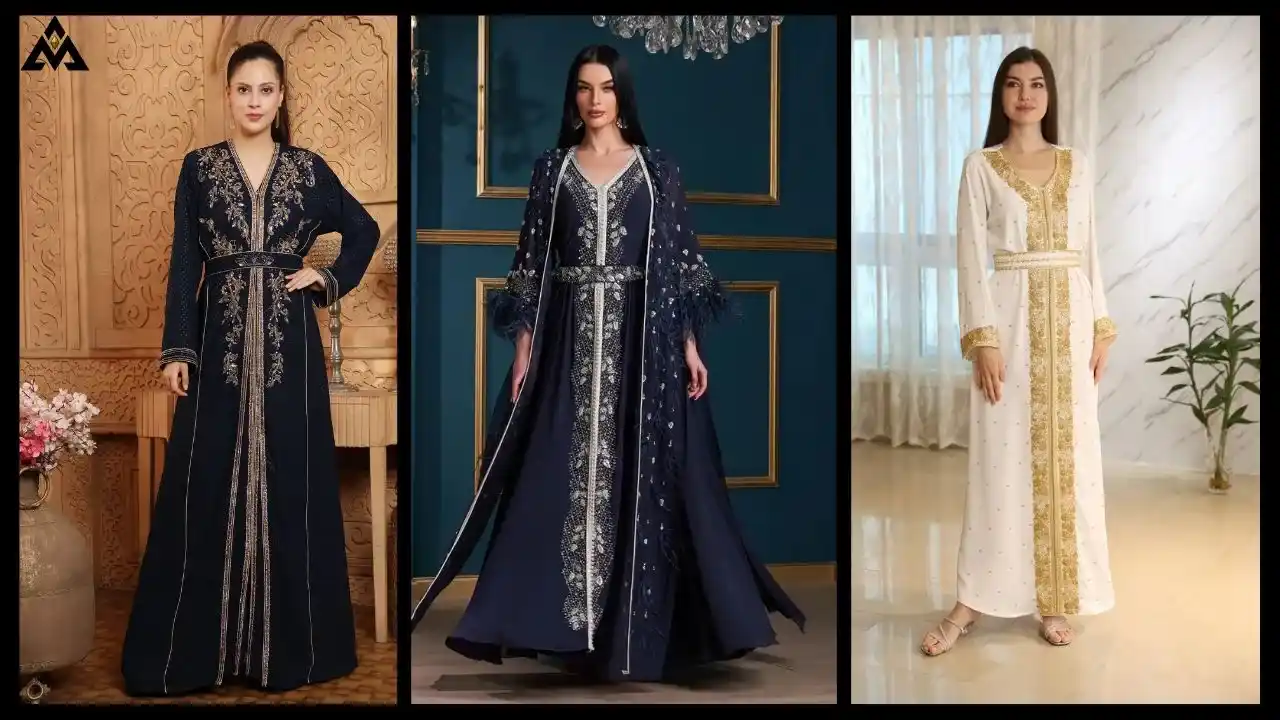
Moroccan Kaftan is one of the most refined forms of traditional Moroccan clothing, representing centuries of craftsmanship, identity, and elegance. More than a dress, it is cultural heritage clothing that reflects Morocco’s royal history while remaining relevant in modern global fashion. Today, it is worn at weddings, celebrations, and luxury events across North Africa, the Middle East, and beyond, especially in premium markets like the UAE.
Rooted in Morocco’s traditional attire, the kaftan has evolved without losing its soul. Its ability to balance tradition with contemporary design is what makes it admired by designers, brides, and fashion connoisseurs worldwide.
What Is a Moroccan Kaftan? (Origins & Meaning Explained)
A Moroccan kaftan is a long, flowing garment, designed with structure, intricate embroidery, and ceremonial detailing, which distinguishes it from kaftans found in other cultures. What makes it uniquely Moroccan is the combination of tailored construction, luxurious fabrics, and symbolic ornamentation that reflects social status and occasion.
Unlike generic kaftans, this Moroccan traditional dress is often custom-made and worn as ceremonial clothing, especially during formal events. Its historical roots are influenced by Andalusian aesthetics, where artistry and elegance were central to dress culture.
History of the Moroccan Kaftan in Royal & Traditional Fashion
The kaftan became prominent during Morocco’s imperial eras, where it was worn in royal courts as a symbol of authority and refinement. Nobility favoured rich fabrics, gold thread, and hand embroidery, shaping what we now recognise as royal Moroccan clothing.
Over centuries, this centuries-old garment evolved through regional craftsmanship hubs like Fez and Marrakech, where artisans preserved techniques while adapting designs to changing tastes. This continuity is what gives the kaftan its historical depth and credibility.
Cultural Significance of Moroccan Kaftan in Weddings & Celebrations
In Moroccan society, the kaftan symbolises status, grace, and cultural pride. It is most notably worn at weddings, where the Moroccan bridal kaftan represents honour, femininity, and family heritage.
As ceremonial attire, it marks life’s most meaningful moments. Brides often change into multiple kaftans during celebrations, each design reflecting a different emotional or cultural meaning. This tradition continues to define Moroccan wedding culture today.
Moroccan Kaftan Women’s Styles: Traditional to Modern Designs
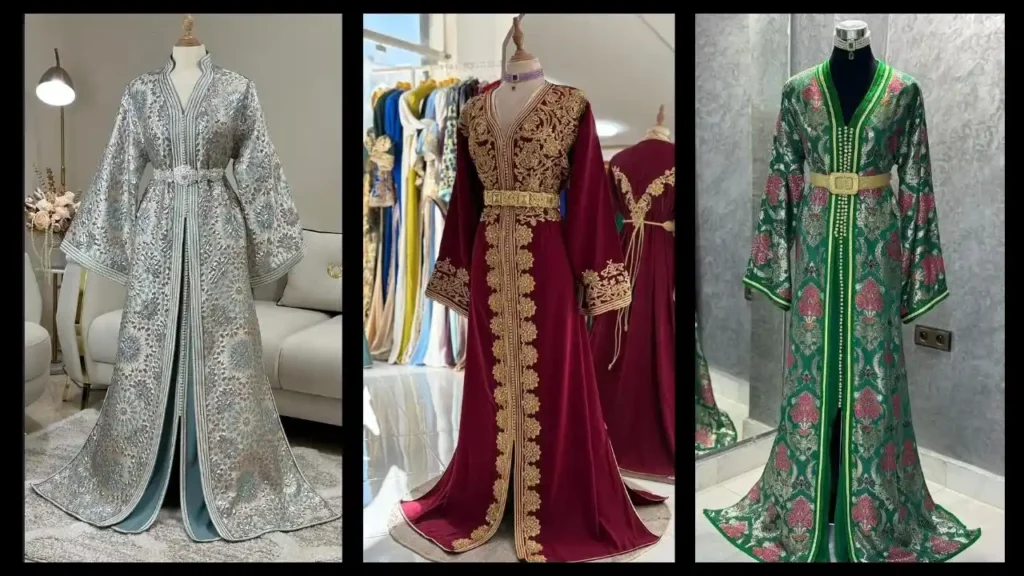
Moroccan Kaftan Women’s Styles are loved for blending heritage details with modern elegance. You can wear them for weddings, formal dinners, or luxury gatherings without losing cultural authenticity.
1. Traditional Moroccan Kaftan Women’s Styles
Traditional Moroccan Kaftan Women’s Styles focus on classic cuts, rich trims, and heritage finishing. You’ll often see structured shoulders, long flowing sleeves, and detailed borders that reflect Moroccan craftsmanship. These designs feel formal, timeless, and ideal for cultural celebrations where tradition matters most.
2. Modern Moroccan Kaftan Women’s Styles
Modern Moroccan Kaftan Women’s Styles feature cleaner silhouettes, lighter materials, and minimal detailing. Designers often use subtle embroidery, contemporary necklines, and streamlined shapes that suit today’s fashion preferences. This style is perfect when you want elegance that feels updated, wearable, and less heavy.
3. Embroidered Moroccan Kaftan Women’s Styles
Embroidered Moroccan Kaftan Women’s Styles highlight intricate threadwork as the main statement. You’ll find hand- or fine-machine embroidery on chest panels, sleeves, and hemlines, often paired with refined trims. This sub-style works best when you want a luxurious look without relying on heavy stones or layered pieces.
4. Luxury Moroccan Kaftan Women’s Styles
Luxury Moroccan Kaftan Women’s Styles are designed for premium occasions and high-end styling. These pieces typically use elevated fabrics and detailed finishing, with a stronger focus on polish and presence. They are ideal for weddings, formal nights, and events where you want a standout traditional look.
5. Minimalist Moroccan Kaftan Women’s Styles
Minimalist Moroccan Kaftan Women’s Styles keep the flow and grace but reduce embellishments for a sleek finish. You’ll see solid colours, fine piping, and simple belt styling that still looks expensive. This option is best for modern women who want understated elegance and easy re-wear value.
Read More: Moroccan Dress – Complete Style Guide, Trends & Buying Tips
Moroccan Kaftan for Wedding: Bridal, Luxury & Formal Wear
Wedding kaftans are chosen for moments that demand elegance, tradition, and visual impact. A Moroccan Kaftan stands out for blending cultural depth with refined luxury, making it ideal for formal celebrations.
- Bridal Ceremony Elegance: Wedding kaftans are designed to reflect grace and prestige, often worn during key ceremonial moments. Their layered construction and detailed finish help the bride stand apart while honouring tradition.
- Luxury Craftsmanship & Detailing: High-quality fabrics, hand embroidery, and precise tailoring define bridal kaftans. These elements ensure durability, richness, and a premium look suitable for once-in-a-lifetime events.
- Symbol of Cultural Identity: Wedding kaftans carry symbolic value tied to heritage, family honour, and celebration. Wearing one represents respect for tradition while embracing timeless fashion.
- Formal Event Versatility: Beyond weddings, kaftans are suitable for receptions, engagement events, and high-profile gatherings. Their adaptability makes them a reliable choice for a variety of formal occasions.
- Modern Bridal Adaptations: Contemporary designs introduce lighter fabrics and refined silhouettes while maintaining traditional essence. This evolution keeps the Moroccan Kaftan relevant for modern brides seeking elegance with comfort.
Moroccan Kaftan for Men: Traditional & Contemporary Male Styles
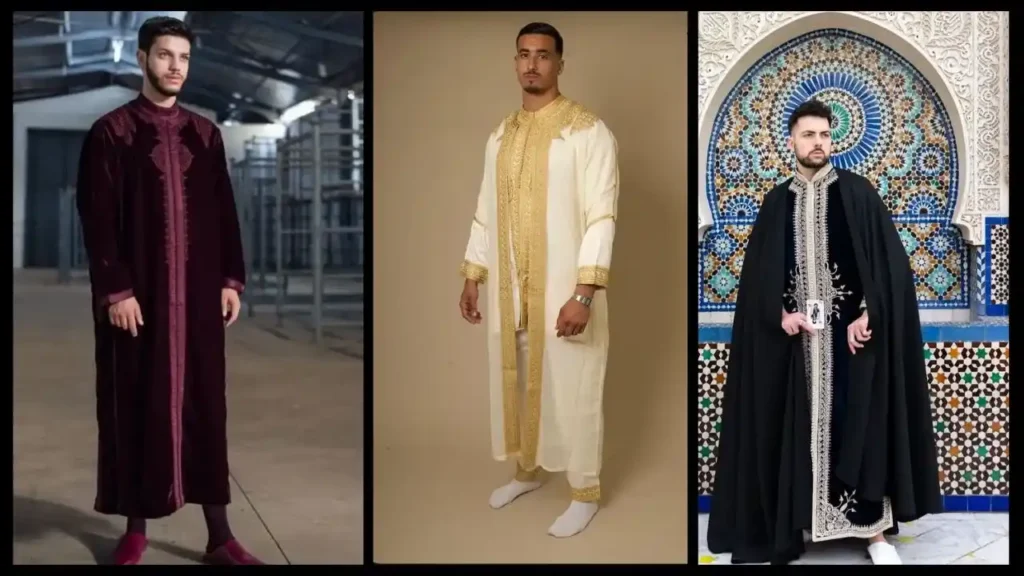
Men’s kaftan styles reflect dignity, cultural pride, and understated elegance rooted in centuries-old tradition. In Morocco, male kaftans have long been associated with formal occasions, religious events, and ceremonial gatherings.
1. Traditional Men’s Kaftan Designs
Traditional men’s kaftans are characterized by straight cuts, ankle-length silhouettes, and modest detailing. These garments were historically worn during religious ceremonies and official events. The focus remains on simplicity rather than heavy embellishment. Such designs convey respect, authority, and cultural continuity.
2. Ceremonial & Religious Wear
Men often wear kaftans during Friday prayers, weddings, and important family celebrations. Neutral colours and refined tailoring make them appropriate for sacred and formal settings. The design emphasizes cleanliness, structure, and dignity. This makes the kaftan a trusted choice for ceremonial wear.
3. Contemporary Male Kaftan Styles
Modern interpretations introduce subtle updates in fabric and fit. Lighter materials and streamlined cuts improve comfort while preserving tradition. Designers now adapt kaftans for broader use beyond ceremonies. This evolution allows men to wear kaftans in a wider range of social and cultural contexts.
4. Fabric Choices & Tailoring for Men
Men’s kaftans prioritize breathable fabrics such as cotton blends, wool, and lightweight silk. Tailoring plays a crucial role in achieving a polished appearance. Proper fit ensures ease of movement and visual balance. The quality of fabric selection directly impacts durability and comfort.
5. Modern Styling & Occasional Use
Today, men style kaftans with minimal accessories and traditional footwear. Some designs are paired with contemporary elements for cultural events or formal dinners. This balance between old and new increases versatility. As a result, kaftans remain relevant for modern men seeking cultural elegance.
Fabrics, Craftsmanship & Embellishment Techniques
Authentic kaftans are defined by quality. Artisans use silk, velvet, and fine blends, enhanced through hand embroidery and traditional techniques passed down through generations.
A handmade Moroccan kaftan reflects hours of skilled labour. This artisanal process is why craftsmanship directly impacts both durability and value, distinguishing genuine pieces from mass-produced alternatives.
Moroccan Kaftan in UAE & Dubai: Luxury Fashion Demand
The rise of luxury modest fashion has increased demand for Moroccan kaftans in the Gulf. Buyers in the UAE appreciate kaftans for their elegance, cultural resonance, and suitability for high-profile events.
Dubai, in particular, has become a hub where Moroccan design meets Middle Eastern fashion, positioning the kaftan as a statement of refined taste and luxury.
Moroccan Kaftan for Sale: How to Choose the Right One
When exploring options for a Moroccan kaftan for sale, the first step is understanding authenticity. Genuine kaftans are defined by quality fabrics, hand embroidery, and careful tailoring rather than mass production. Details such as stitching precision, fabric weight, and finishing reflect the level of craftsmanship and directly influence durability and elegance.
Price is usually affected by materials, design complexity, and whether the piece is custom-made or ready-to-wear. Buyers should compare quality to price rather than focusing solely on cost, as lower-priced options may lack longevity or cultural accuracy. Choosing the right kaftan ultimately means balancing craftsmanship, purpose, and personal style for long-term value.
How to Style a Moroccan Kaftan for Modern Occasions
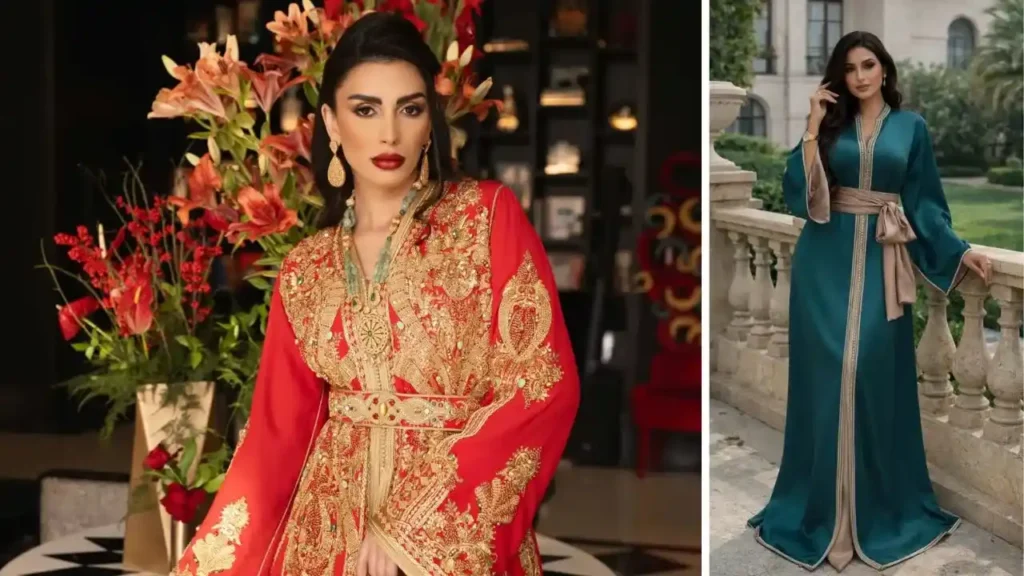
Modern occasions demand elegance, comfort, and personal expression. Styling a Moroccan kaftan today is about balancing traditional charm with contemporary fashion sensibilities to create a refined, confident look.
1. Choose the Right Silhouette for the Occasion
Selecting the correct silhouette sets the foundation for styling. Structured kaftans work well for formal events, while relaxed cuts suit cultural or semi-formal gatherings. The goal is to maintain elegance without restricting movement. Fit should enhance posture and overall presence.
2. Balance Accessories with Simplicity
Accessories should complement the kaftan rather than overpower it. Minimal jewellery allows embroidery and fabric details to stand out naturally. Statement pieces work best when the kaftan design is subtle. This balance keeps the look refined and intentional.
3. Modern Footwear Pairing
Footwear can modernize the entire outfit when chosen carefully. Traditional slippers suit cultural settings, while elegant heels or refined flats adapt the look for contemporary venues. Comfort and proportion matter as much as style. Footwear should align with the event’s formality.
4. Use Layering and Belts Thoughtfully
Belts can define the waist and add structure to flowing designs. Modern belts with clean finishes refresh traditional silhouettes. Layering should remain minimal to avoid visual heaviness. Proper layering enhances shape without distracting from craftsmanship.
5. Adapt Styling for Day vs Evening Events
Daytime occasions benefit from lighter colours and breathable fabrics. Evening events allow for richer tones and subtle shine, adding impact. Makeup and hair should align with the time and setting. This adaptability keeps the kaftan relevant across different modern occasions.
Conclusion
The Moroccan kaftan remains timeless because it successfully blends cultural heritage with evolving fashion needs. From royal traditions to modern luxury wardrobes, it continues to represent elegance, identity, and skilled craftsmanship that fast fashion cannot replicate.
Whether chosen for weddings, formal occasions, or luxury markets like the UAE, the kaftan offers lasting value through authenticity and design depth. Its relevance today proves that meaningful fashion is not defined by trends, but by history, purpose, and quality.
FAQs
Is a Moroccan kaftan suitable for non-Moroccan weddings?
Yes, it is widely worn worldwide for luxury weddings due to its elegance and cultural richness.
How many outfits does a traditional Moroccan bride wear?
A bride may wear multiple kaftans during different wedding ceremonies, each with unique symbolism.
Can Moroccan kaftans be worn outside formal events?
Modern lightweight designs can be styled for semi-formal and cultural gatherings.
Are authentic Moroccan kaftans always handmade?
High-quality traditional kaftans are usually handmade, though machine-made options also exist.
Do Moroccan kaftans follow standard sizing?
Most premium kaftans are custom-stitched to ensure proper fit and elegance.